The BAA recently descended on Toulouse for the 2026 International Romanesque Conference, Transmission, Reception and Imitation in Romanesque Art and Architecture. Across the week, members and speakers explored the movement of artistic ideas, materials, techniques, and iconographies across Romanesque Europe.
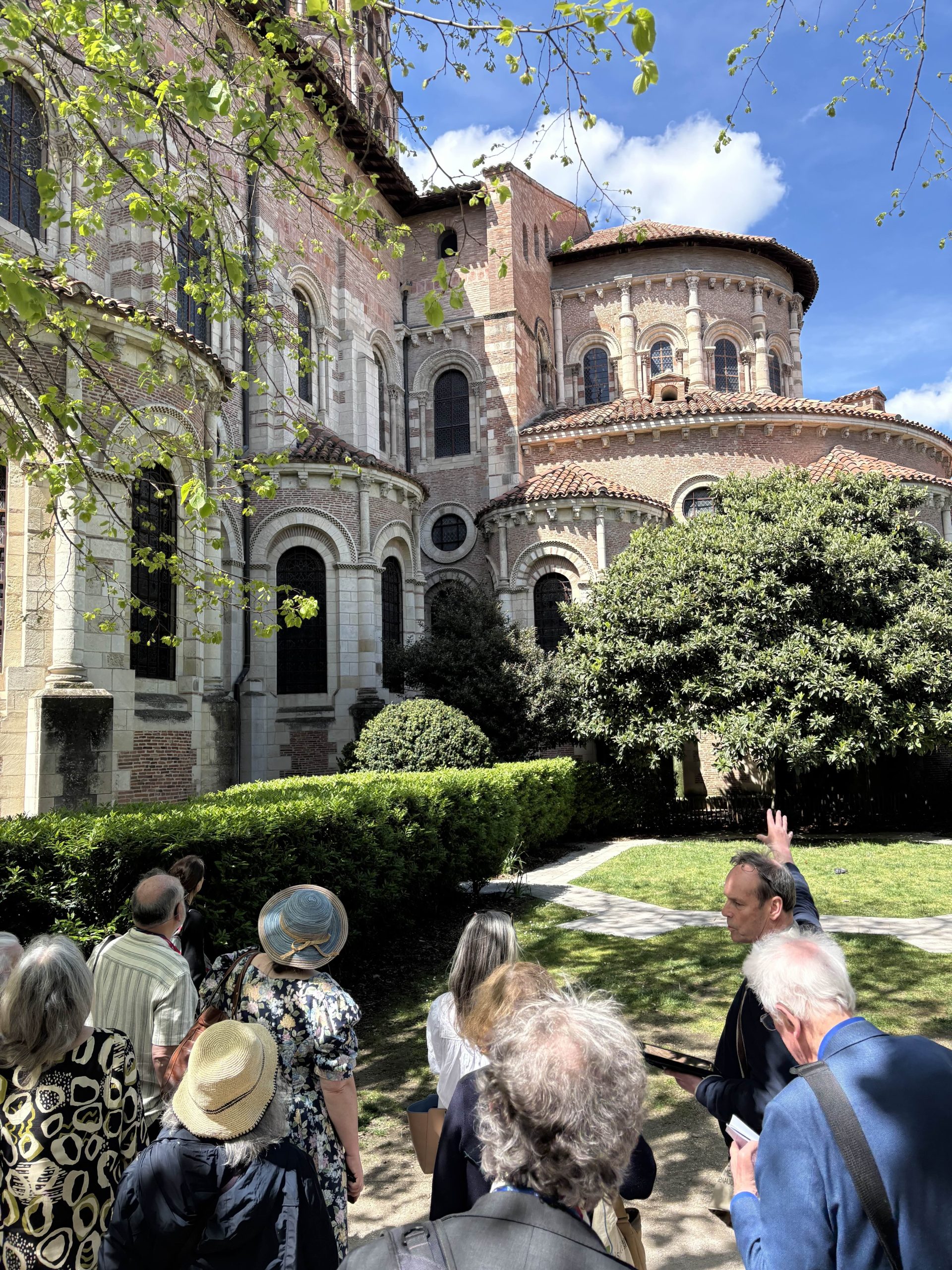
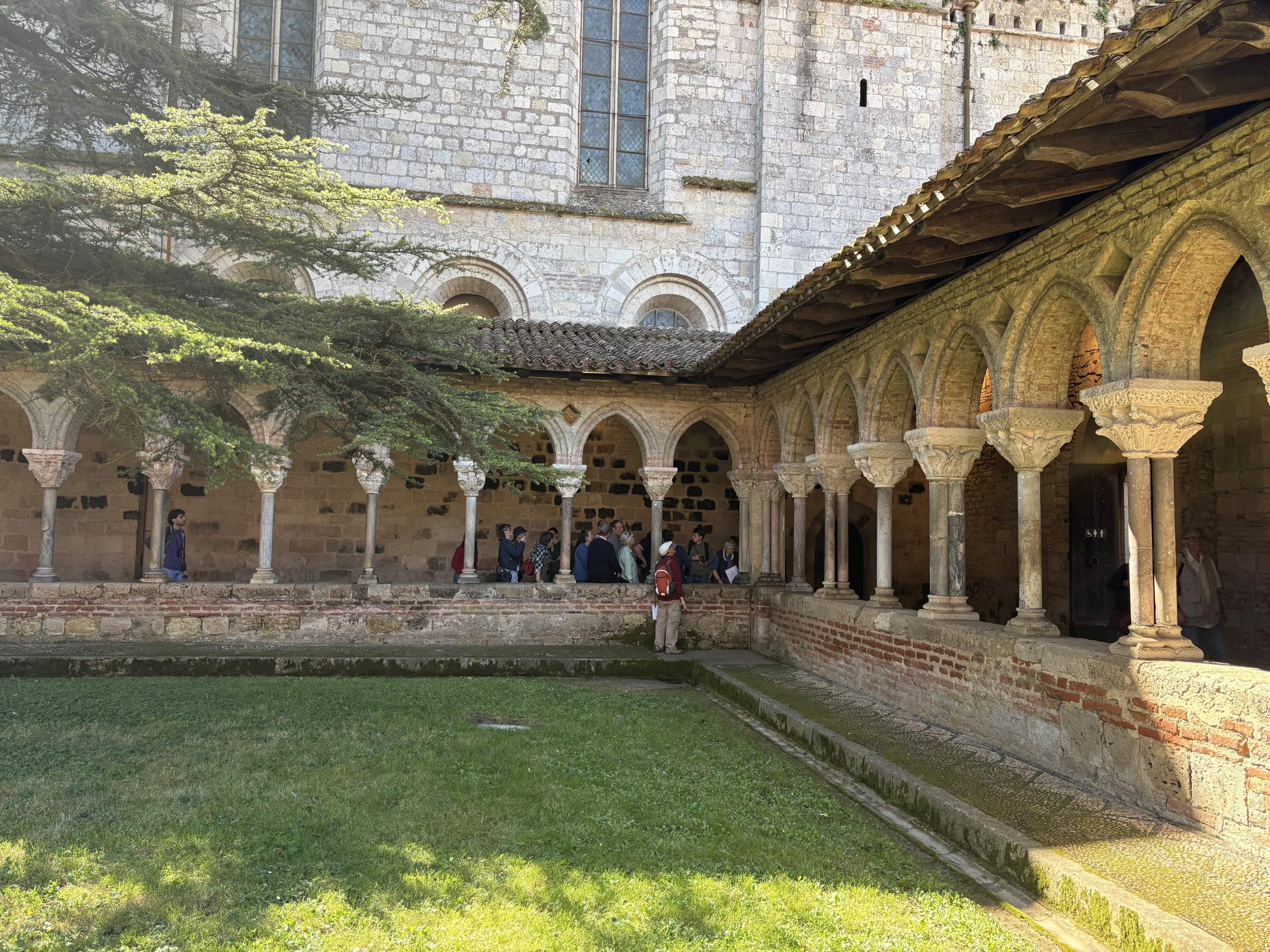
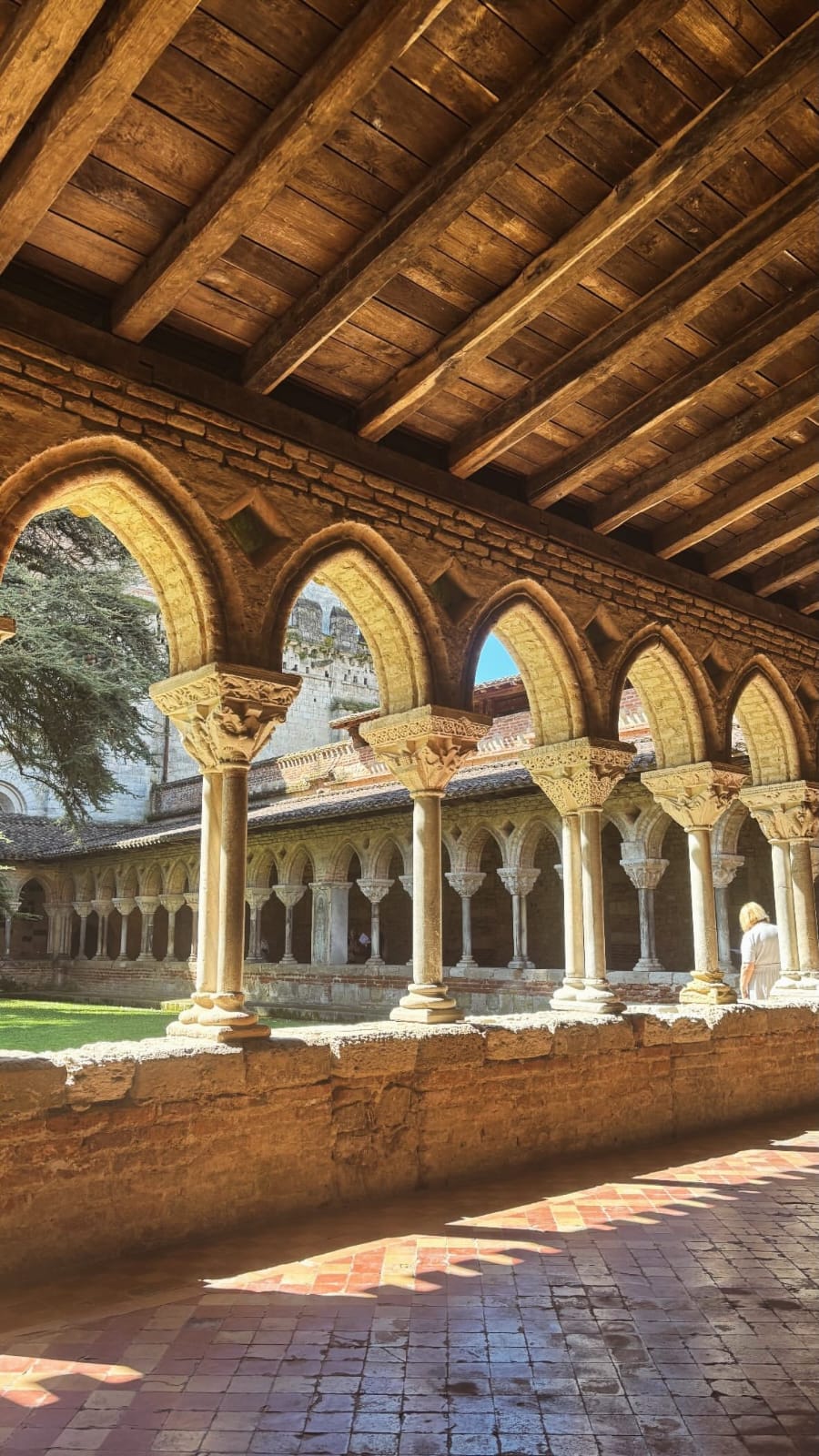
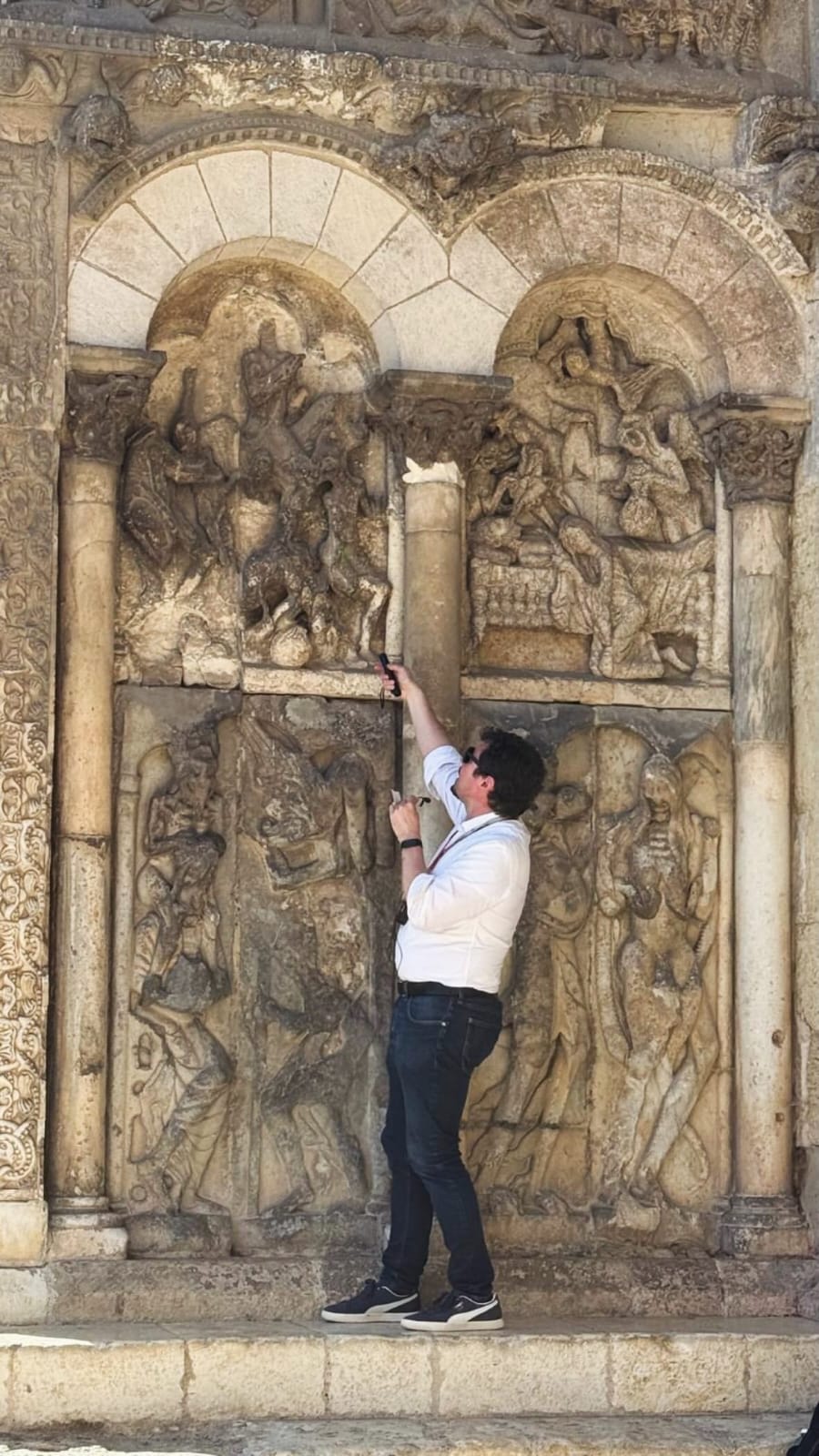
Based at the magnificent Hôtel d’Assézat, the conference brought together an international group of scholars for a rich programme of papers ranging from monastic networks and transcultural exchange to questions of patronage, mobility, liturgy, and artistic identity. Alongside the formal sessions, attendees also had the opportunity to explore the Romanesque heritage of Toulouse and the surrounding region through visits to museums and churches, as well as an unforgettable excursion to Moissac.
The conference was convened by Quitterie Cazes and Richard Plant, with Kate Milburn serving as Conference Secretary, and continued the BAA’s longstanding biennial Romanesque conference series. We are also extremely grateful to John Osborn, whose generosity once again helped make the conference possible.
BAA Member Tracey Warr has also written two lively accounts of the conference on Substack: ‘An Unruly of Archaeologists’ and ‘Romanesque lions’. Thank you, Tracey!
The BAA in Toulouse: A Reflection by Professor Lindy Grant
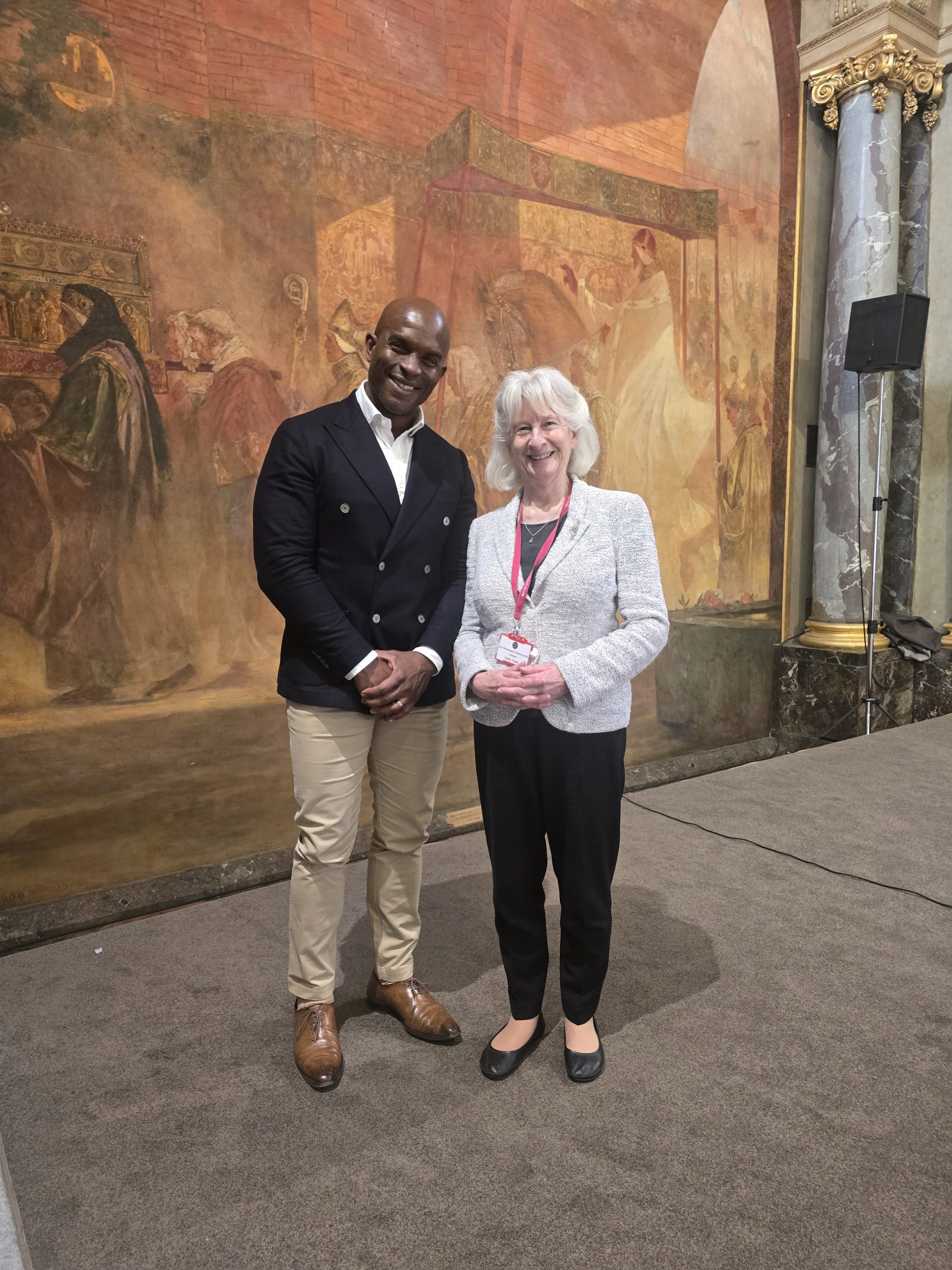
“I hugely enjoyed the BAA Romanesque Conference in Toulouse – I think everyone did. And I learn a lot too, from an impressive set of papers, and from the visits in Toulouse itself and at Moissac. The weather was a challenge to those who like to travel light, in that it was nine degrees and raining when we arrived, but reached 25 and brilliant sunshine by the time we left. Even when it was sunny, there was a refreshing sharp chill breeze along the Garonne, and as you looked along the river, you could see the snow-covered Pyrenees.
The lectures took place in the beautiful Hotel D’Assézat, which houses the learned societies of Toulouse – a bit like London’s Burlington House. It is an even more stunning building, built in the 16th century by the architect Nicolas Bachelier for Pierre D’Assézat, a merchant who owed his riches to woad, widely grown in the fields around Toulouse. We were able to hold the lectures there thanks to Madame Virginie Czerniak, who as well as being a lecturer at the University Jean-Jaures of Toulouse, is the President of the Société Archéologique du Midi de la France. The BAA thinks of itself as a venerable society, founded in 1843 – but the Société Archéologique du Midi de la France is even more venerable, founded in 1831.
On the Tuesday evening, we were invited to a reception at the Capitole – the magnificent Town Hall of Toulouse – with the permission of the mayor of Toulouse, Monsieur Jean-Luc Moudenc. I think that Professor Quitterie Cazes, who holds the chair in the history of medieval art at the University Jean-Jaurès, and Virginie Czerniak, had worked hard behind the scenes to arrange this for us in the immense Salle des Illustres, with its abundant gilding and astounding 19th and early 20th century paintings and sculptures of the history of Toulouse.
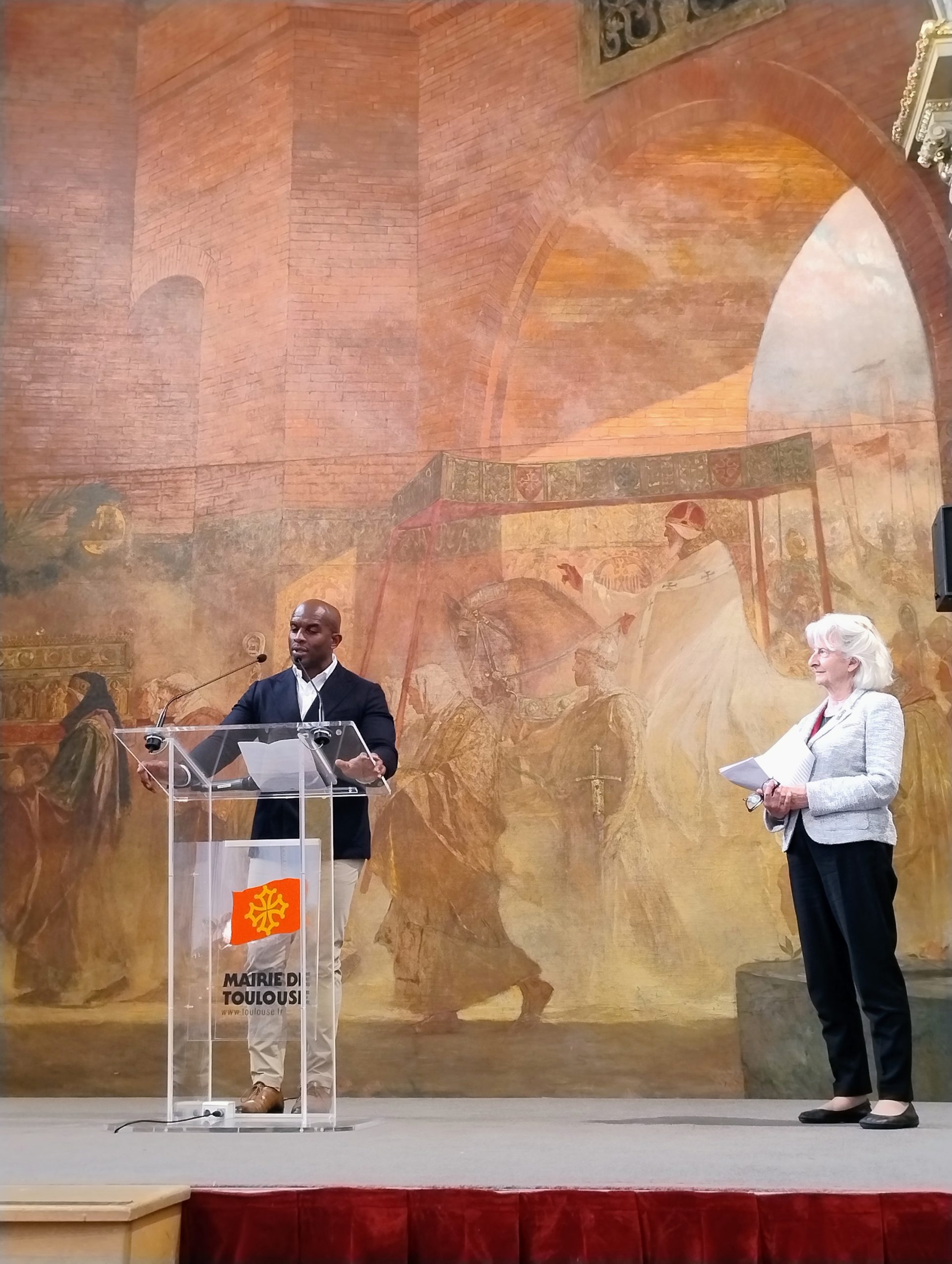
We were received by Monsieur Eric Jean-François, the Municipal Councillor in charge of Museums, Arts in Public Spaces and Cinema, who gave a short and elegant welcoming speech. He was delightfully urbane, with an impressive command of English, and many participants at the conference much enjoyed talking with him. Since our current president could not come to the conference, Richard and Kate asked me, as a previous president, to respond to Monsieur Jean-François’s speech of welcome. I did – in a French which I hope was not too mangled and ungrammatical, with a vast painting by Benjamin Constant of the entrance of Urban II into Toulouse in 1096 as a backdrop. I couldn’t resist referring to the fact that in the early 13th century, one and the same person was Earl of Leicester and Count of Toulouse – not least since last summer our annual conference was held at Leicester. I was slightly nervous about this, because the person in question was Simon V de Montfort, whose reputation in Toulouse is distinctly ambiguous….he was killed as he tried to besiege the Château Narbonnais by a stone from a mangonel operated by the women of Toulouse. But the Salle des Illustres turned out to feature a huge statue of Count Simon, so it seemed appropriate after all.”
– Professor Lindy Grant
Carlyne Henocq, University of Toulouse Jean Jaurès
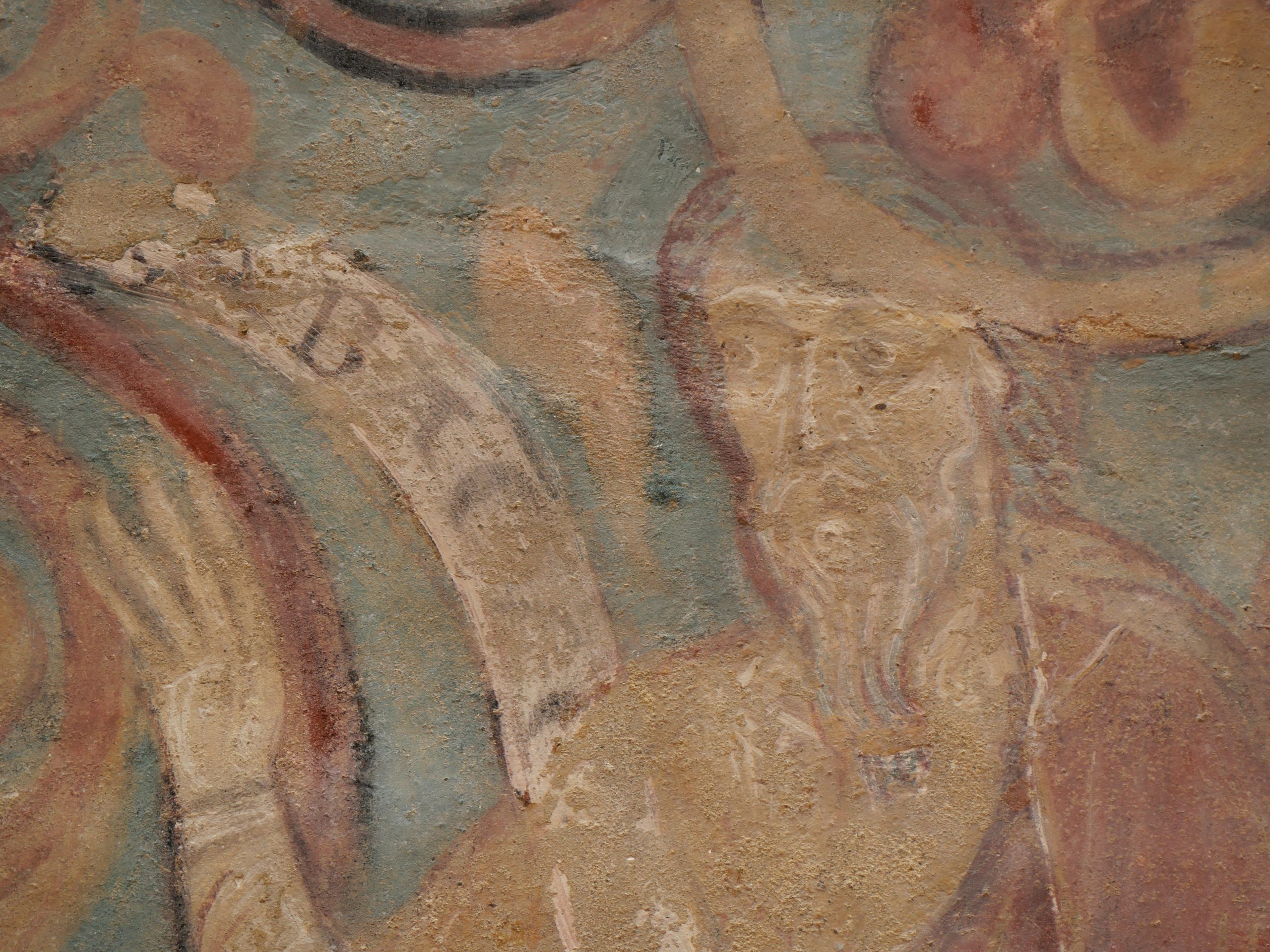
“The Toulouse Romanesque Conference was a truly unique event which, thanks to the diversity of approaches and methodologies employed, shed new light on the mechanisms of transmission and reception involved in medieval artistic creation. I was particularly struck by the importance of terminological work in current research. The discussions devoted to the notions of traditio, aemulatio, and translatio demonstrated just how essential a rigorous definition of these concepts is for understanding medieval realities, that are often very distant from our contemporary categories of thought.
It has been a great honour for me to contribute to the organization of this conference over the past two years. I was very pleased to have the opportunity to lead tours of the iconic Basilica of Saint-Sernin in Toulouse and the more intimate painted chapel of the abbey residence in Moissac. I remain deeply grateful for the stimulating conversations with the speakers and participants, which made this conference an unforgettable experience.”
– Carlyne Henocq, visit lead and conference organiser
Emeric Rigault, University of Toulouse-Jean Jaurès
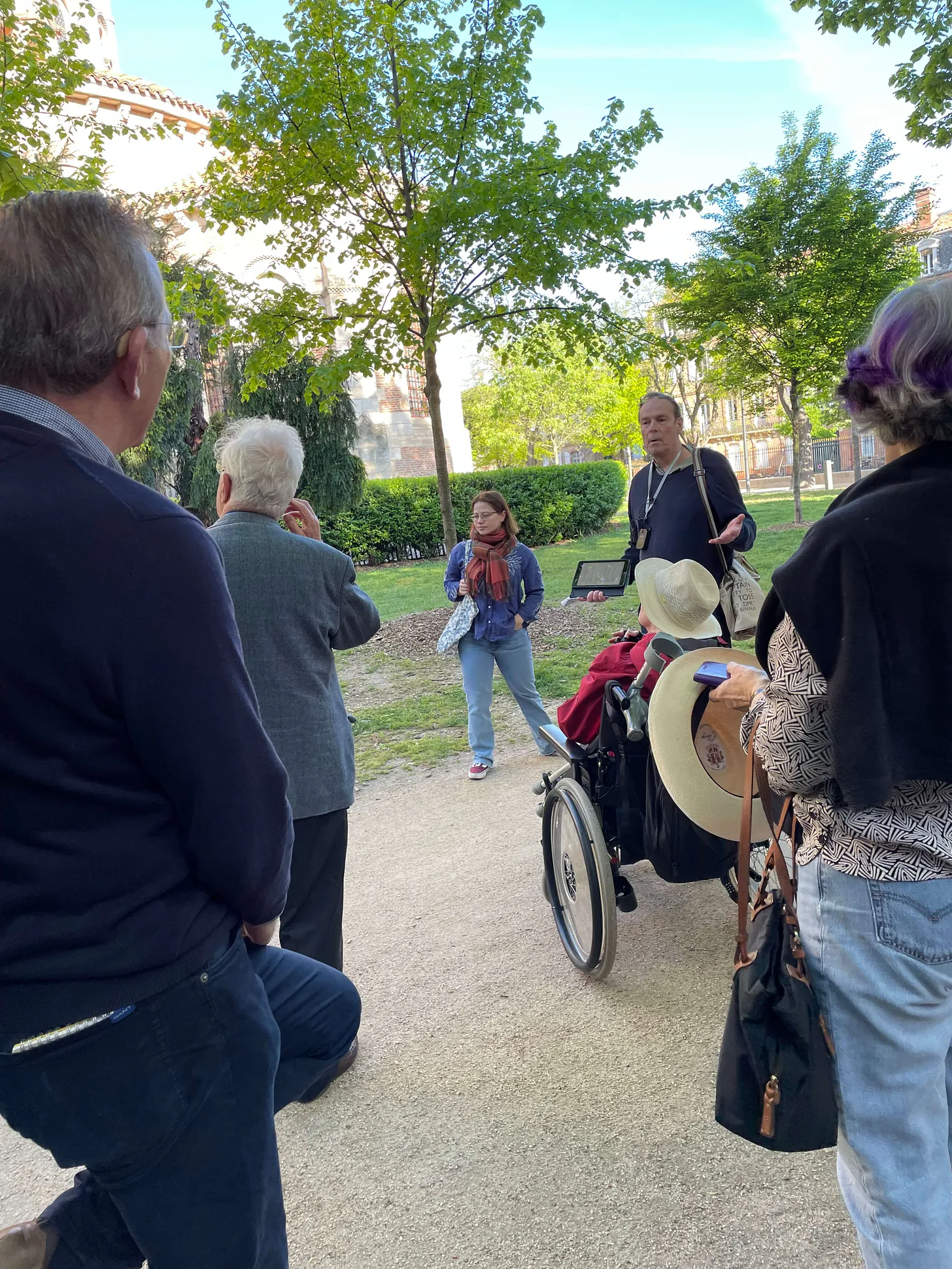
“I would like to highlight in particular the diversity of the papers presented, and consequently how stimulating they were. Each one, in its own way, helped to refine our understanding of the medieval concept of ‘traditio’ and the agency of art creators. Stimulating is also the word I would use to describe the questions and feedbacks from the attenders during the site visits (Augustins museum and Moissac cloister). Further proof that even famous monuments still need to be questioned!”
– Emeric Rigault, visit lead and conference organiser
Gregor von Kerssenbrock-Krosigk, Universität Basel
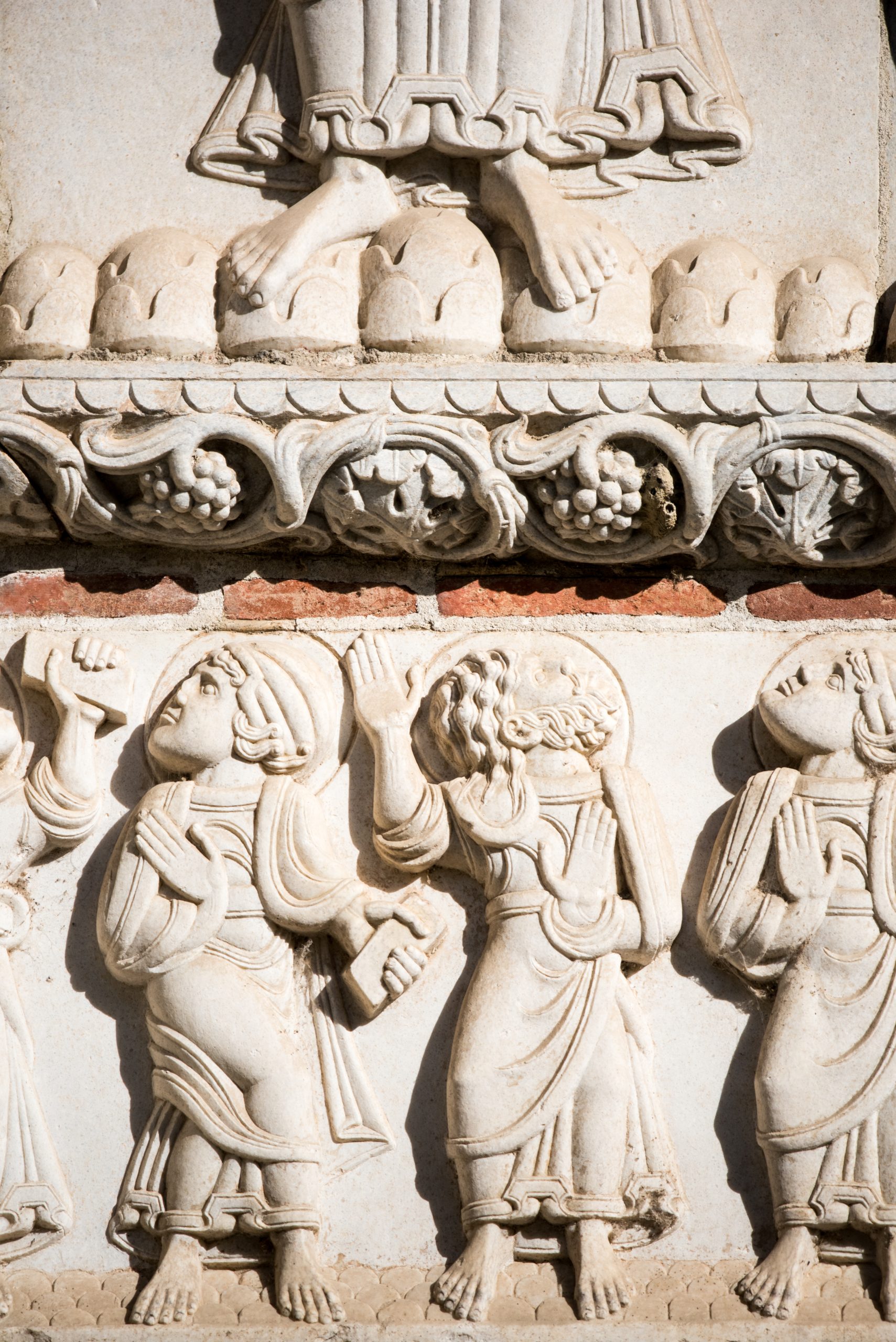
“Attending the Romanesque Conference in Toulouse was a very special opportunity for me, in several ways. Centred around the term ‘transmission’, the talks provided various approaches to this term, which places the singular work of art into longer processes of reception and imitation. While we know frighteningly little about how these processes took place in practical terms in this period, several presentations highlighted how deliberate transmission was in Romanesque art and architecture, at times involving specific alterations to artistic practices, and almost always hard labour. Moreover, the term brings into focus how medieval artisans themselves looked at the works of others before them, or, in other terms, how artworks themselves became the material that held the potential for new works of art. All this necessarily involved artisans who were attentive to the possibilities that other works of art offered, and worked hard to understand them. And an audience that was keenly aware that the works of art they looked at were interconnected in complex ways. There are obvious parallels to the conference itself. It too opened new questions and possibilities of thinking for me, and I am very grateful to have had the pleasure of attending with a student scholarship. It was inspiring to experience such a density of scholarship within such a friendly and open environment. In particular, I treasure the wonderful conversations I had during the site visits in Toulouse and Moissac.”
– Gregor von Kerssenbrock-Krosigk, conference scholarship recipient