
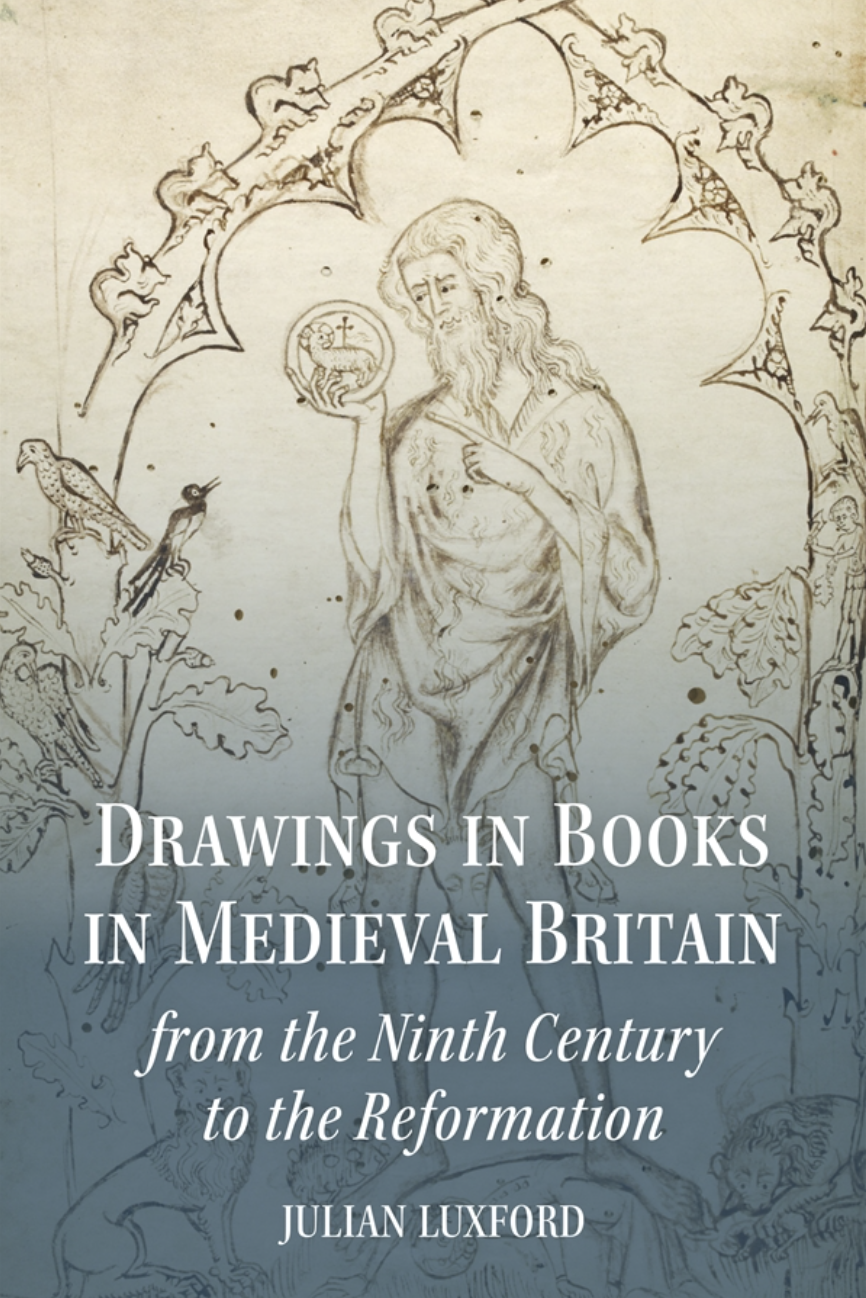
We are delighted to share the publication of a new book by long-standing BAA member and former BAA President Professor Julian Luxford, Drawings in Books in Medieval Britain from the Ninth Century to the Reformation, released by Boydell Press.
Professor Julian Luxford is our former President, who has contributed much research to various BAA conference transactions and to the Journal of the British Archaeological Association. Julian is a Professor in Art History at the University of Saint Andrews.
Below is the book’s blurb:
The first broad and long study of a major aspect of British medieval art, examining the historical relationships between medieval drawings and books.
The art of drawing and its products had a determining relationship to the visual arts of the Middle Ages. They also had other purposes, which if understood, help one to grasp the broader availability and usefulness of the medium. This groundbreaking study deals particularly with the historical relationships between medieval drawings and books. Using a wide range of material and documentary evidence, it explains how book-bound drawings may be defined, classified, and understood in relation to their physical settings and the ends they were made to serve.
In orientation, the study is primarily art historical: most of its arguments emerge from curiosity about the psychology and experience of making drawn images. As such, it tackles a surprisingly neglected field. Because it deals with a pervasive aspect of book-design, it also makes a basic contribution to medieval codicology. There are six substantial chapters, the first two dealing with the definition of drawings, existing scholarly approaches to them, and issues of artistic status and agency. These lay the groundwork for the rest of the study, which analyses the placement of drawings at the fronts and backs of books (chapters 3, 4), and drawings embedded in the bodies of manuscripts that were mainly devoted to text (chapters 5, 6). Drawing emerges as an accessible, flexible medium of expression to rank with writing.
Purchase the book online
Drawings in Books in Medieval Britain from the Ninth Century to the Reformation is available now to purchase.