Join the BAA on Thursday 21 May 2026 for a study day at Tintern Abbey. Tintern Abbey lies on one of the most scenic stretches of the River Wye, on the border between England and Wales. Founded on 9 May 1131 by Walter fitz Richard de Clare (d. 1138), the Anglo-Norman lord of Chepstow, Tintern was among the earliest Cistercian plantations in Britain. The monks followed a strict observance of the Rule of St Benedict, which required a commitment to poverty, chastity, silence, prayer, and work.
The centrepiece of the monastic complex at Tintern is its magnificent late thirteenth-century abbey church, built between about 1269 and 1301. Largely constructed in a local red sandstone, the church consists of a seven-bay aisled nave, with two chapels in each transept, and a four-bay aisled presbytery. The impressive west front, with its seven-light Decorated-style window, was almost certainly completed in time for a dedication ceremony in August 1301, attended by the ‘second founder’, Roger Bigod (d. 1306), earl of Norfolk.
Most of the monks’ quarters and other monastic buildings are still preserved at Tintern, though in a more ruinous state than the church. These include the large thirteenth-century cloister, the chapter house, dormitory and latrines, refectory, kitchen and infirmary. The abbot’s lodging was originally built in the early thirteenth century but were significantly expanded in the fourteenth.
The Dissolution of the Monasteries brought an end to Cistercian life at Tintern. The abbey was surrendered to Henry VIII’s commissioners by Abbot Richard Wyche on 3 September 1536 and the buildings subsequently fell into ruin. The site nevertheless experienced a new lease of life in the eighteenth century when the ivy-clad abbey became a popular tourist destination and a favourite for Romantic painters and poets, notably J. M. W. Turner and William Wordsworth.
Conservation Project
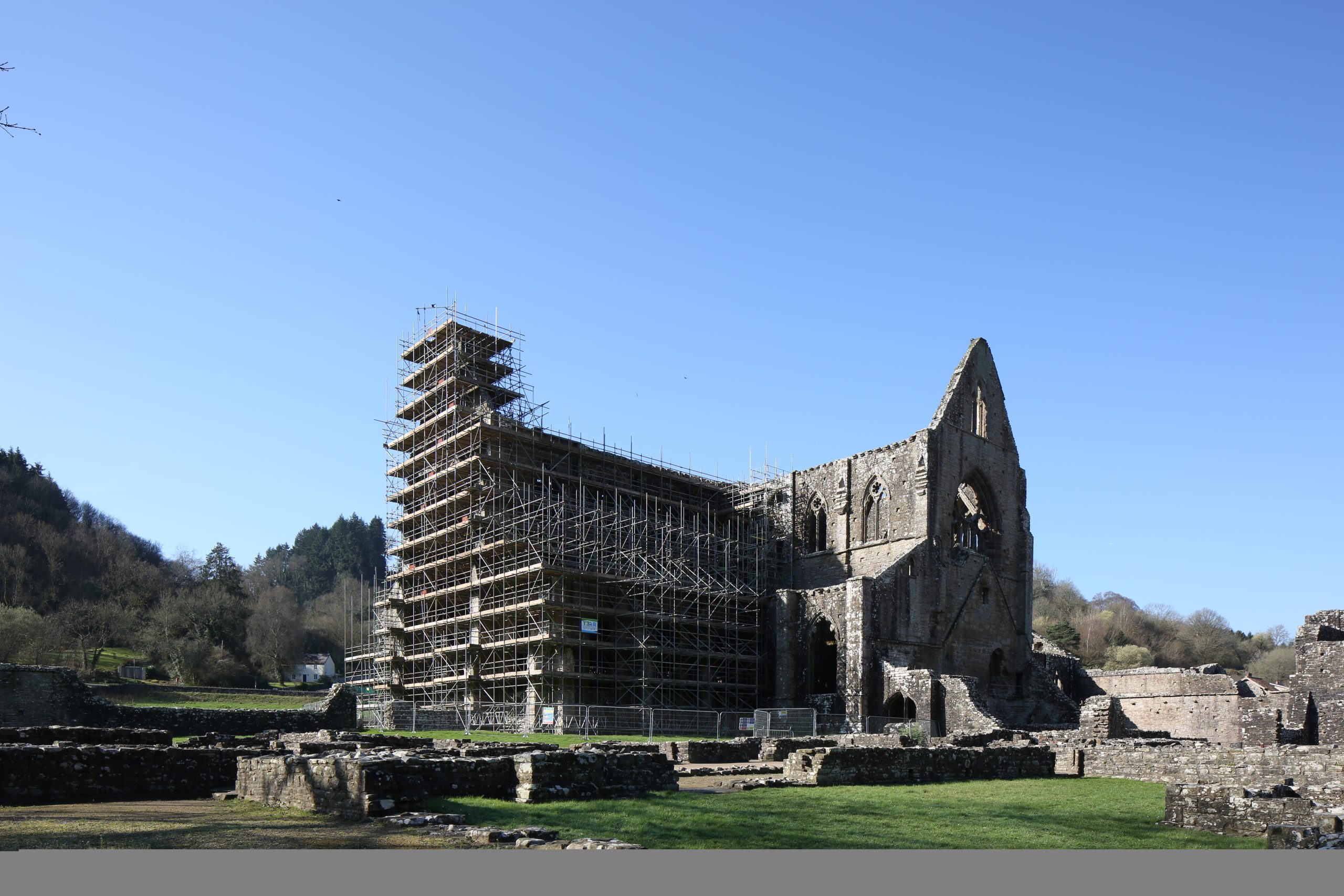
Tintern was taken into the care of the State in 1901, with major conservation works carried out through to the late 1920s. Unfortunately, however, the local ‘Tintern Sandstone’ used by the medieval masons remains particularly susceptible to decay. In 2021, Cadw (the Welsh Government’s historic environment service) launched a major conservation programme, which aims to address these issues and preserve the abbey and its architecture for future generations. The work has recently entered its second phase, with scaffolding currently erected around the east and north sides of the presbytery. Steered by a multi-disciplinary project team, the conservation work showcases a sophisticated blend of traditional craftsmanship and modern technology, best illustrated in the selective replacement of decorative elements, notably window tracery.
The BAA Study Day at Tintern offers a rare opportunity to see this major conservation work in action. The day will begin with an introduction to the site, followed by an overview of the abbey’s history and architecture. Weather and health and safety checks permitting, the afternoon will include access to the scaffolding to see the conservation work close at hand. To this end, hard hats, high-vis jackets and safety glasses must be worn (if any delegates are able to bring their own, it will be helpful). Delegates will receive a health and safety briefing before accessing the scaffolding.
NB: Any delegates wishing to access the scaffolding must be fit and able to do so, be comfortable with heights, and be wearing the correct footwear: boots or walking shoes (trainers are not acceptable).
Applications
The cost of the day will be £25 for BAA members. The event is free for students, for whom travel grants (up to a maximum of £50) are also available. Student applicants do not need to be BAA members. Places are limited to 20, of which up to 10 are reserved for students.
To apply, please e-mail studydays@thebaa.org by Friday, 1 May 2026. Please state in the email whether you are a member of the BAA or a student. All names will be entered into a ballot, and successful applicants will be notified by Tuesday 5 May 2026.
Please also state in your application whether you would like to make use of the minibus travel between Bristol Temple Meads train station and Tintern Abbey (see further details below).
For inquiries, please contact studydays@thebaa.org.
Study day programme
| 11:00 | Arrive at Tintern Abbey |
| 11:15–11:30 | Welcome to the abbey, led by Will Davies (Inspector of Ancient Monuments, Cadw); and site induction by Tony Gwynne (Clerk of Works for the conservation project) |
| 11:30–12:30 | Session 1: Tintern Abbey’s history and architecture, led by Dr David Robinson (project consultant) |
| 12:30–13:30 | Session 2: The Making of a Monument and the Current Conservation Programme, led by Will Davies |
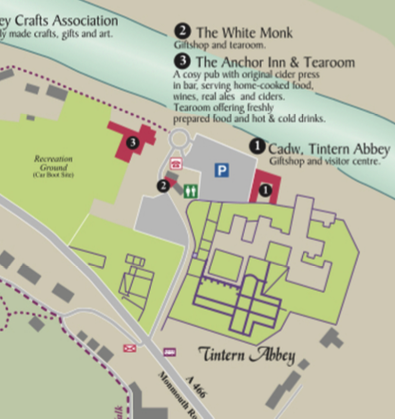
| 13:30–14:30 | Lunch Lunch is not provided, but there is a pub and café directly over the road from the abbey, which sell a good range of hot and cold food. Delegates are welcome to bring their own lunch. |
| 14:30–16:30 | We will divide into two groups and swap halfway through the session. Group A: Conservation in Action and the Role of the Clerk of Works, led by Tony Gwynne and Meurig Williams (senior mason) Group B: Scaffolding visit, if possible; or a tour discussing current issues and progress, led by Will Davies and David Robinson |
| 16:30–17:00 | Concluding remarks |
Travel and Practicalities
Tintern Abbey is most easily accessible by car (the best postcode to use is NP16 6SE). There is a large car park on site.
The nearest train stations are Bristol Temple Meads, Bristol Parkway and Newport.
A minibus will be available to transport delegates from Bristol Temple Meads train station to Tintern Abbey and back. The minibus will leave Temple Meads at 10:00, with an estimated arrival time of 10:45 at Tintern. The minibus will leave Tintern Abbey at 17:00, with an estimated arrival time of 18:00 at Temple Meads. Delegates are nevertheless advised that the traffic between Tintern and Bristol can often be challenging and should take this into account when considering train times.
If delegates make use of the train stations at Bristol Parkway or Newport, they will need to make their own way to Tintern Abbey.
Meeting Point
We will meet at 11:00 just outside the Tintern Abbey Gift Shop and Visitor Centre (No. 1 on map below).