In April 2026, the British Archaeological Association awarded me £500 to conduct fieldwork in Italy for my PhD. The purpose of my research trip was to view the artworks I discuss in the first of my three thesis chapters, which examines the intersection of macabre imagery with the world of play. Focusing on Quattrocento court culture, this chapter takes as its main case study the Death card in the Colleoni deck―the most complete of early hand-painted tarots―which was commissioned in the late 1450s by the duke of Milan and former condottiero Francesco Sforza (1401–1466).
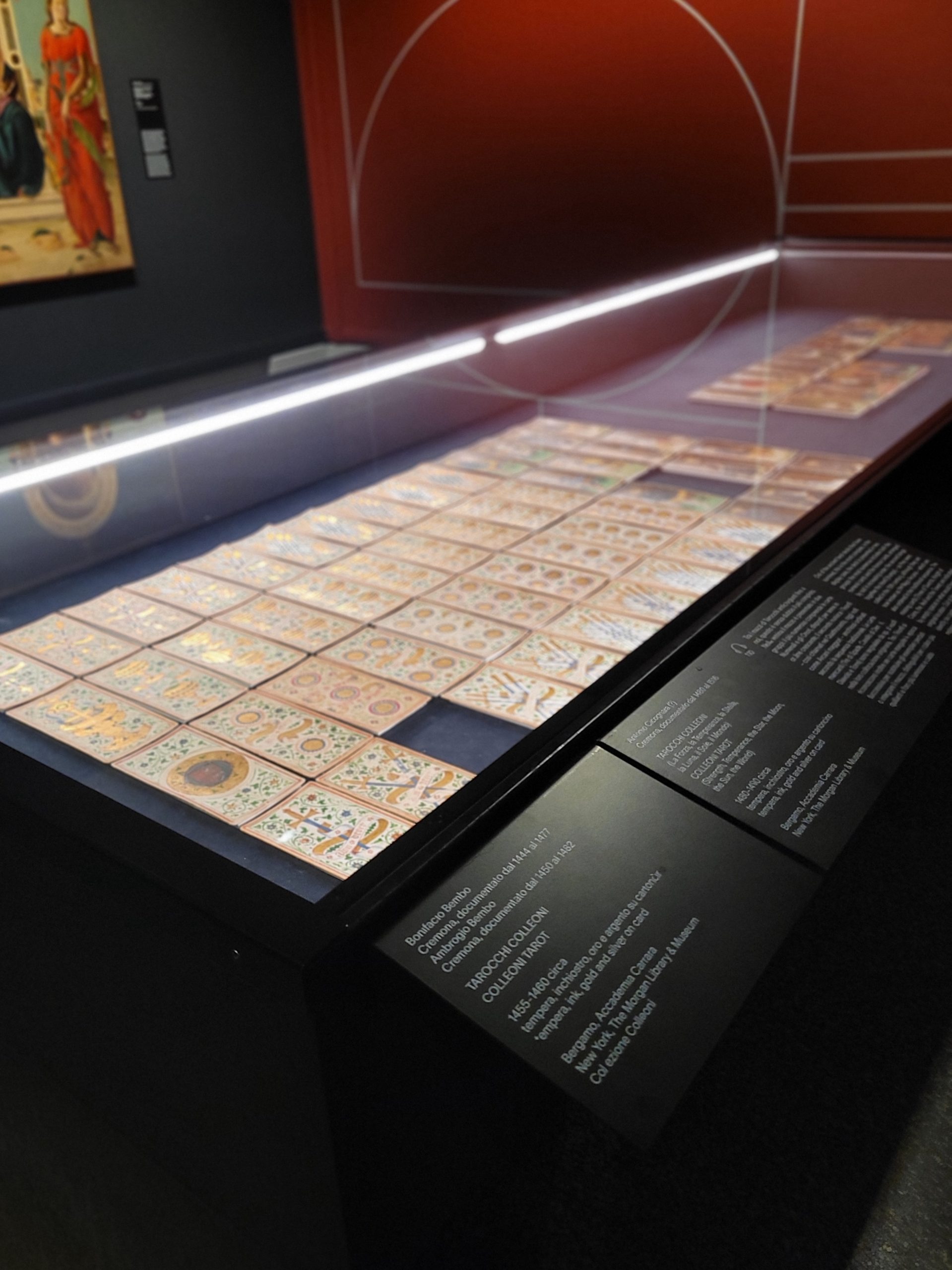
Crucial to my research trip was a visit to the largest and most comprehensive exhibition ever dedicated to the history of tarot at the Accademia Carrara in Bergamo. TAROCCHI. Le origini, le carte, la fortuna united the 74 surviving cards of the Colleoni deck for the first time in over a century, placing them centre stage between rooms that presented the ludic origins of tarot in Renaissance court culture and spaces that showcased the occult transformations of tarot since the sixteenth century. It was exceptional to see the cards of the Colleoni deck out of their mounts, on display and all together in the region where they were produced.
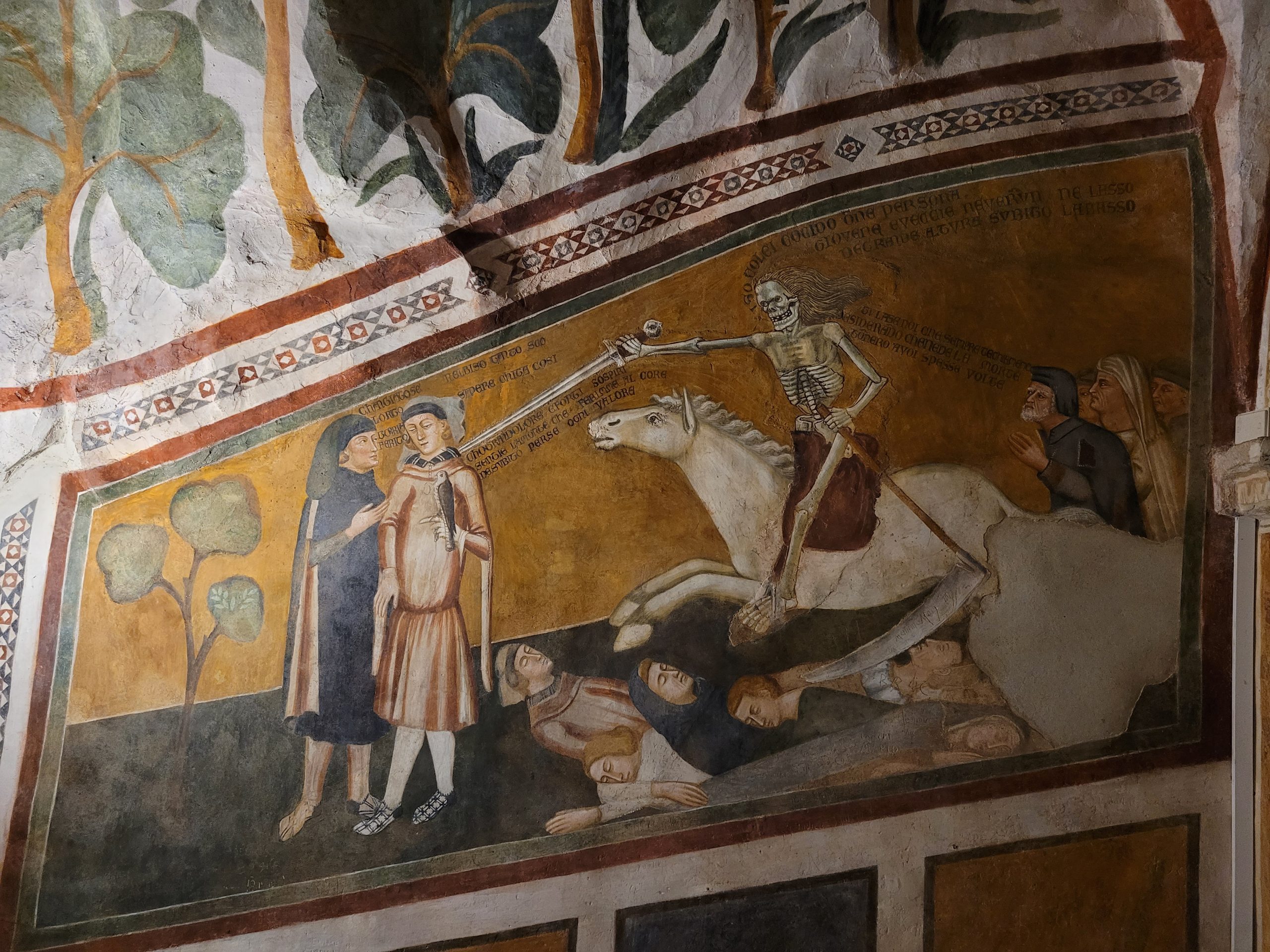
Another aim of this trip was to see for myself frescoes of the Triumph of Death, from which the three earliest surviving Death cards derive their iconographies. I saw the earliest Triumph of Death (1336–1340) at the Camposanto Monumentale in Pisa, the first artwork to show Death as a scythe-wielding skeleton on horseback (c. 1360) at the Sacro Speco in Subiaco, and the only fresco to combine the Triumph of Death with the Three Living and the Three Dead and the Dance of Death (1485) at the Oratorio dei Disciplini in Clusone. Viewing these frescoes at scale in their architectural and religious contexts enhanced my appreciation of their visual impact and historical significance.
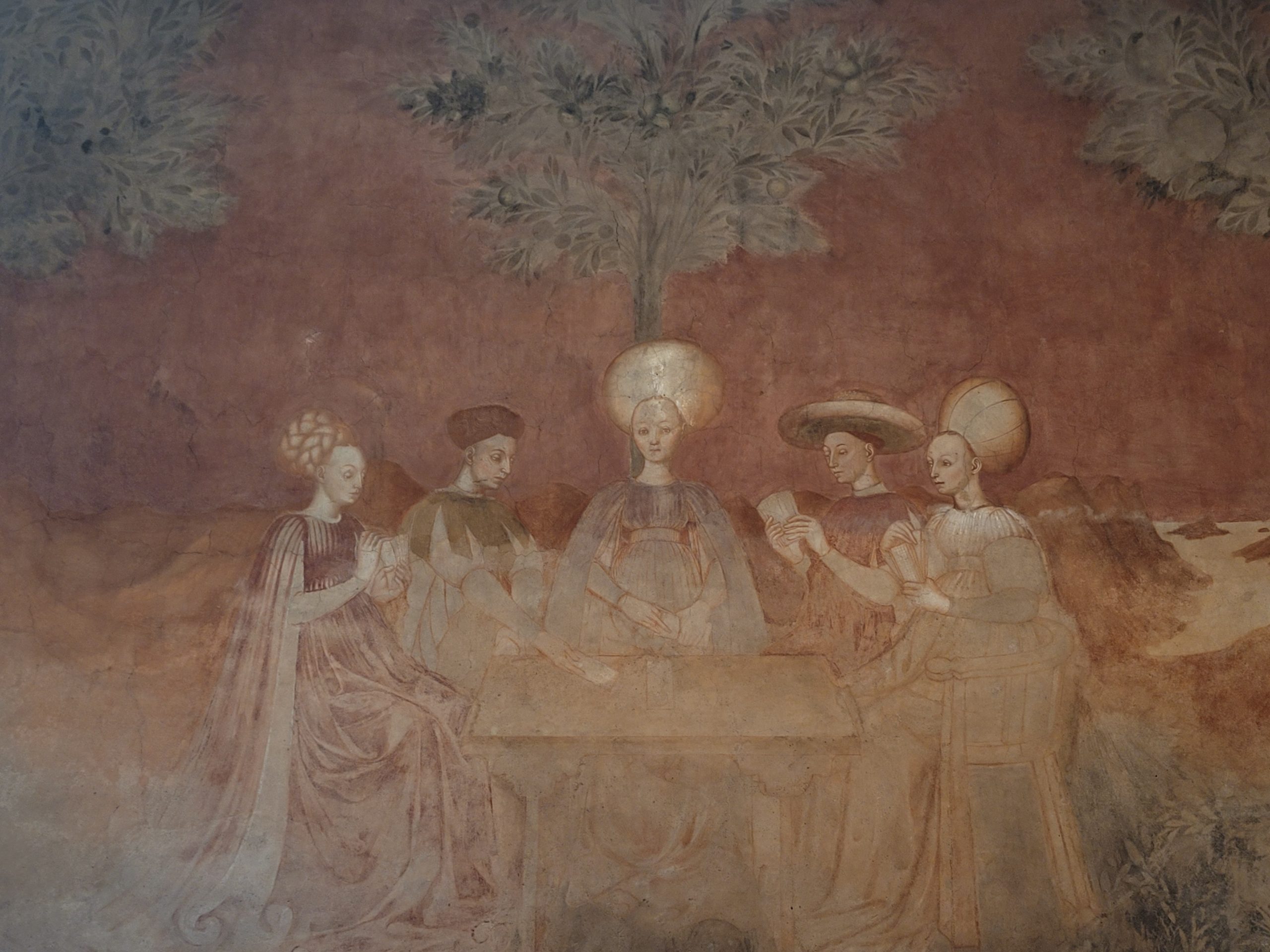
The culminating point of my research trip was Milan, whose historic centre bears witness to the political and artistic influence which the Visconti dynasty, Francesco Sforza and the noble families of their times exerted over northern Italy. In the Duomo, I saw the double tomb of Ottone and Giovanni Visconti, whose epitaph (1354)―written in a humanist Latin that frames epic poetry with memento mori verses―is one of my main primary sources. I explored the Castello Sforzesco, constructed for Francesco Sforza and his successors in the Quattrocento, where now stands the equestrian monument to Bernabò Visconti (1360–1363), which my chapter links to the equestrian imagery of tarot cards and triumphs. I was delighted to be granted a private viewing of the Stanza dei Giochi at the Palazzo Borromeo, which is still owned by the aristocratic family who had it built in the Trecento, because this historic room contains, among four frescoes of courtly play, the earliest and only Renaissance depiction of tarot (c. 1440). These sites offered me a unique opportunity to encounter, together, the political ambition and material luxury of the Milanese court.
I am very grateful to the BAA for enabling me to undertake this week of enriching travel from Lazio to Lombardy. The award not only helped me to complete my research to the highest standard, but also made possible discoveries which I will remember for the rest of my life.
– Mathilde Mioche