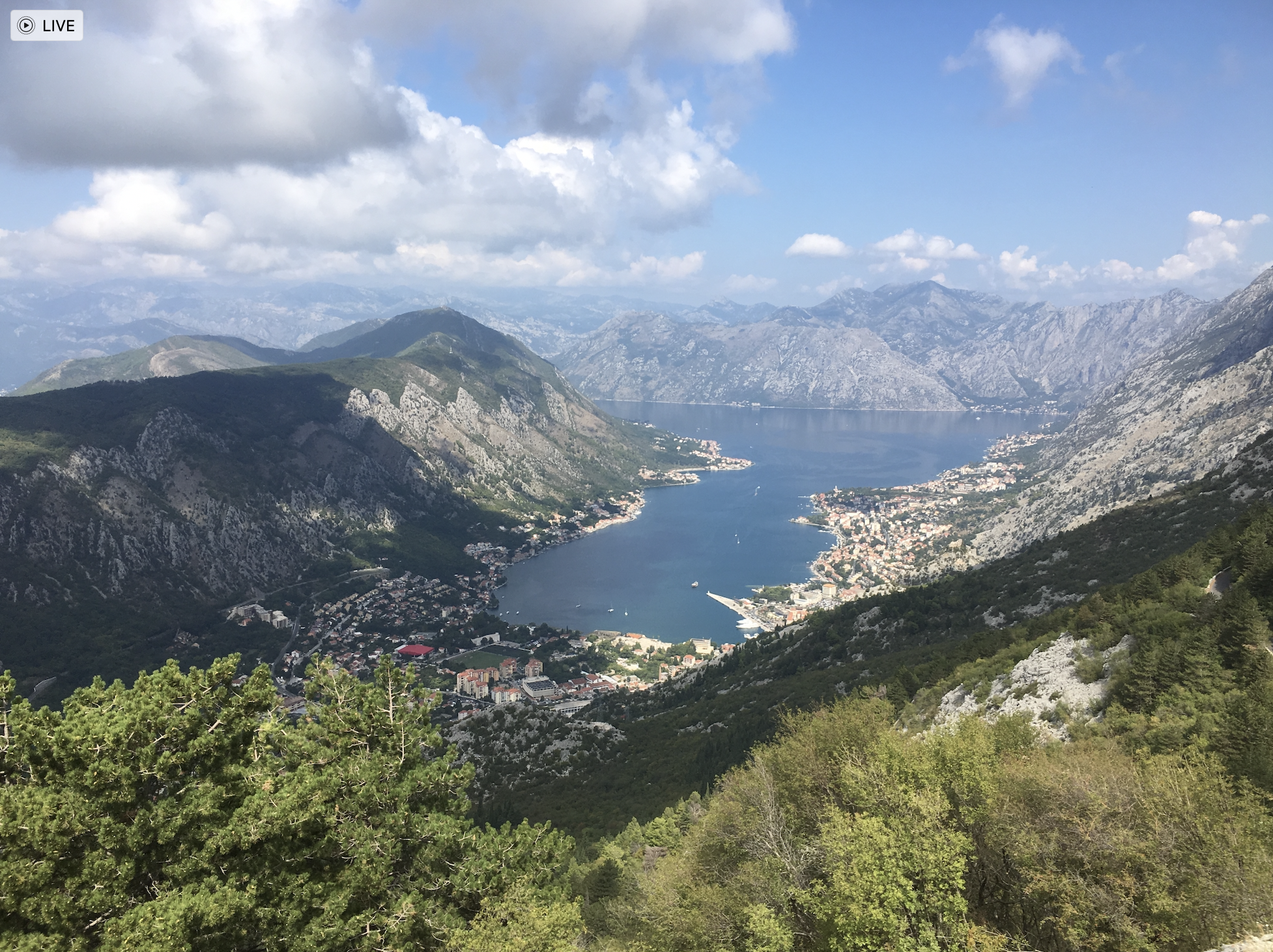
Queen Helena’s realm, Zeta, lay along the southeastern coast of the Adriatic Sea, covering small parts of present-day Croatia, Bosnia and Herzegovina, and significant areas of modern Montenegro and northern Albania. One of the aims of my journey was to shed light on the cities and ports associated with her rule, specifically the ports of Bar, Ulcinj, and Kotor, as well as the city of Trebinje. The generous financial support provided by the British Archaeological Association enabled me to personally visit and document these locations.
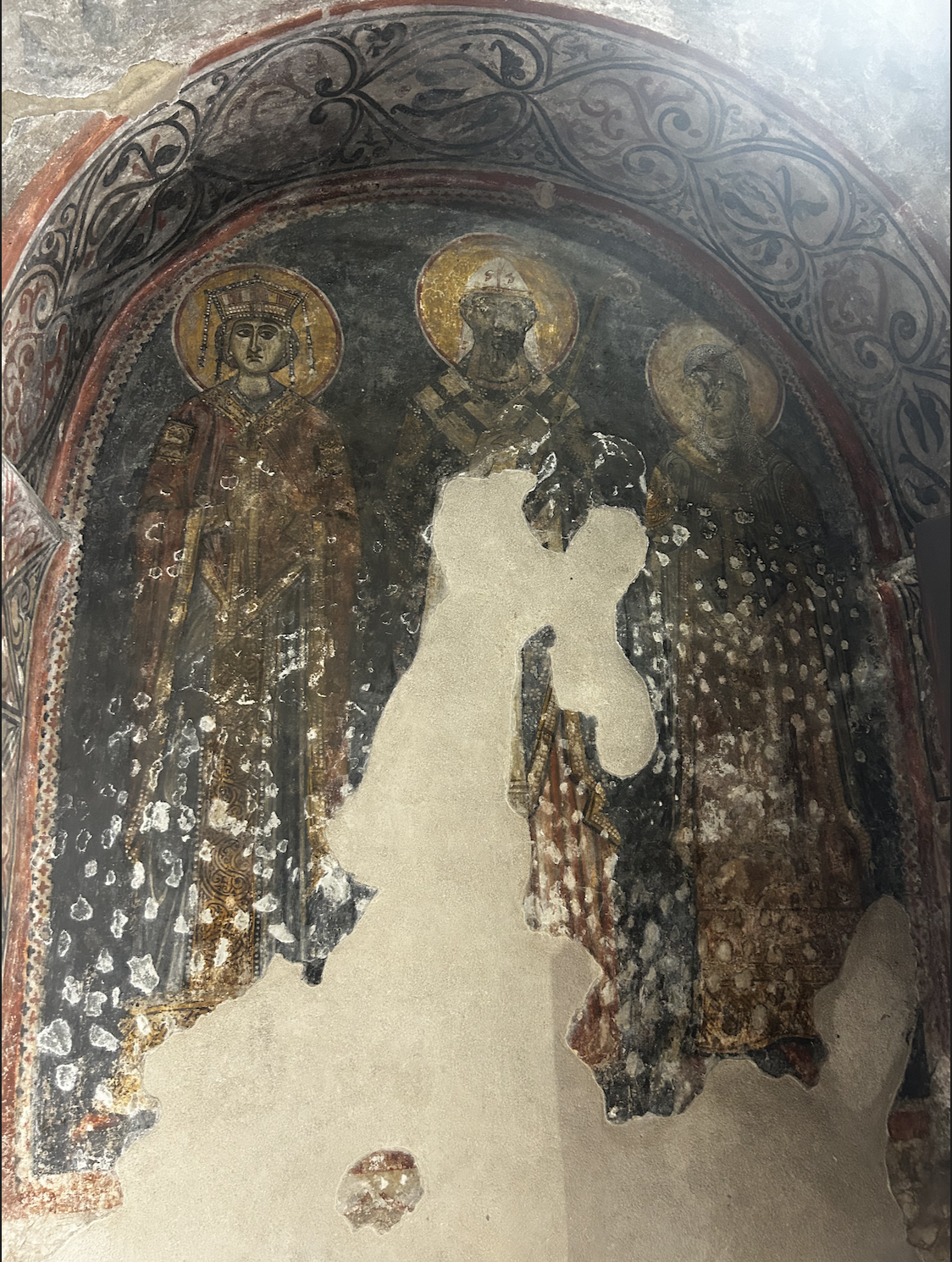
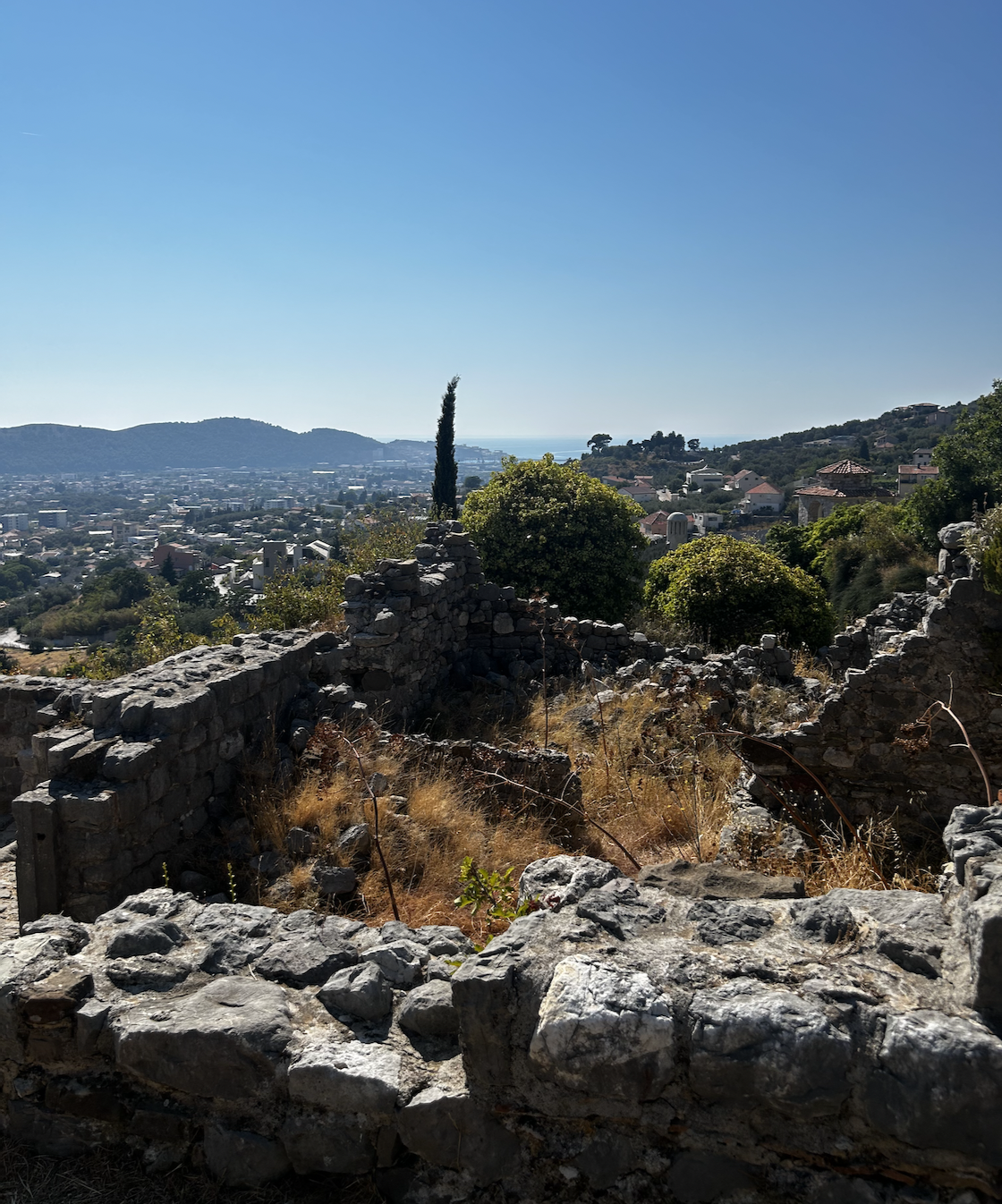
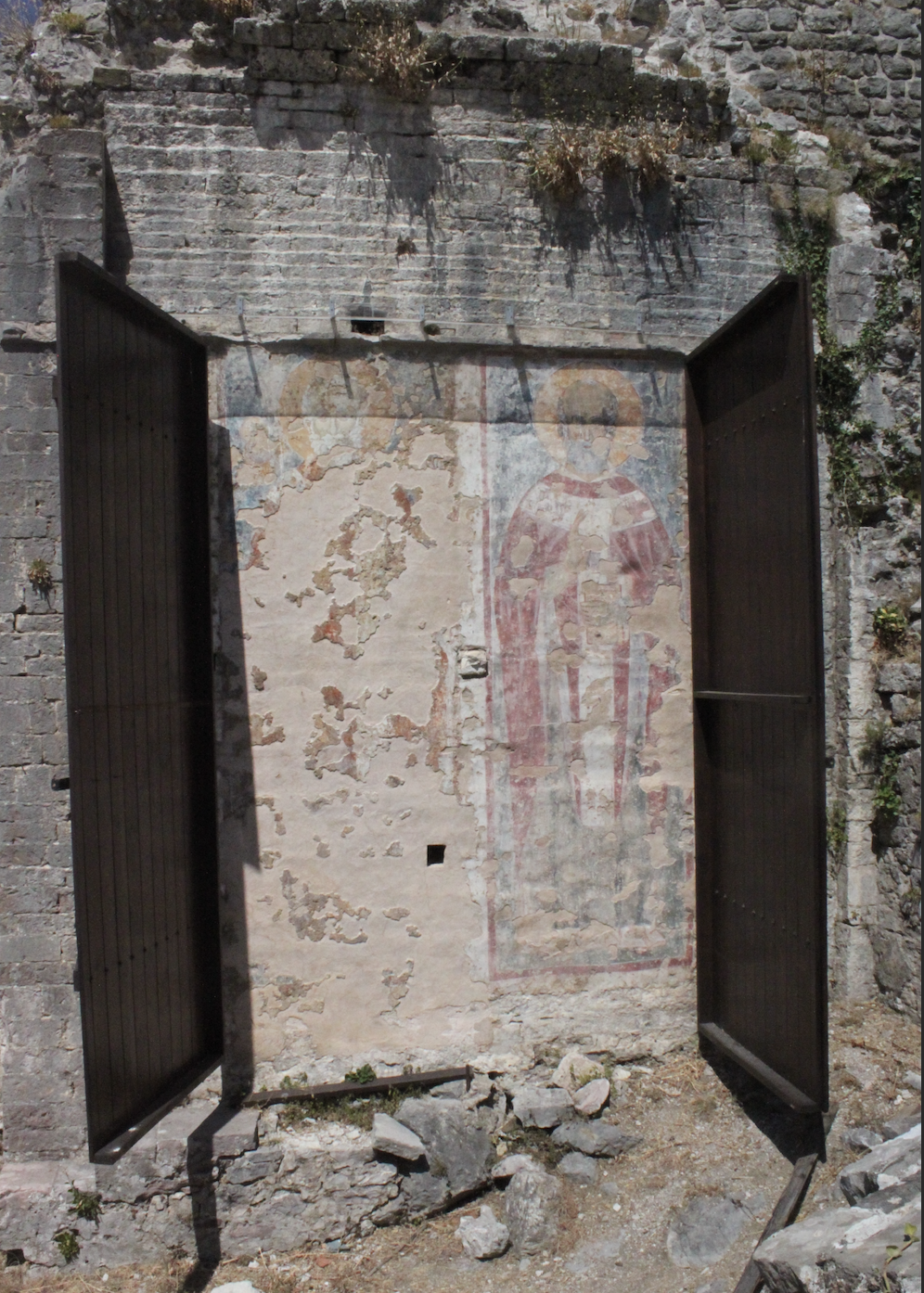
The old city of Bar, located four kilometres from its main port, is currently a vast archaeological excavation site with a rich history and layers of still-undiscovered centuries of archaeological material. With the assistance of a local archaeologist, I witnessed the complexity of cultural and religious entanglements, resulting in a blend of architectural styles that created a unique aesthetic. A pattern that would recur in some form in other ports of the queen’s thirteenth-century realm, such as Ulcinj and Kotor. The City of Trebinje has been mentioned in several primary documents as one of the queen’s residences. The small archaeological community in this town has been increasingly focused on uncovering the medieval layers beneath structures built during the rule of the Venetians, Austro-Hungarians, and Ottomans. Recently, the foundations of a medieval building were uncovered in the historic city of Trebinje, and an evaluation is underway to determine the precise age of the structure.
The primary sources of the eastern Adriatic coast reveal a rich historical narrative characterised by significant connections and cultural exchanges within a broader European context. Although the architecture and artistic heritage of the southeastern Adriatic may not compare to the grandeur or preservation seen in Western Europe, this journey has allowed me to recognise and appreciate its significant role in the broader narrative of the continent. The British Archaeological Association has long demonstrated its commitment to recognising the significance of research that enhances our understanding of various facets and lesser-known aspects of European medieval heritage, and I am deeply grateful for this opportunity.
Marija Mihajlovic-Shipley