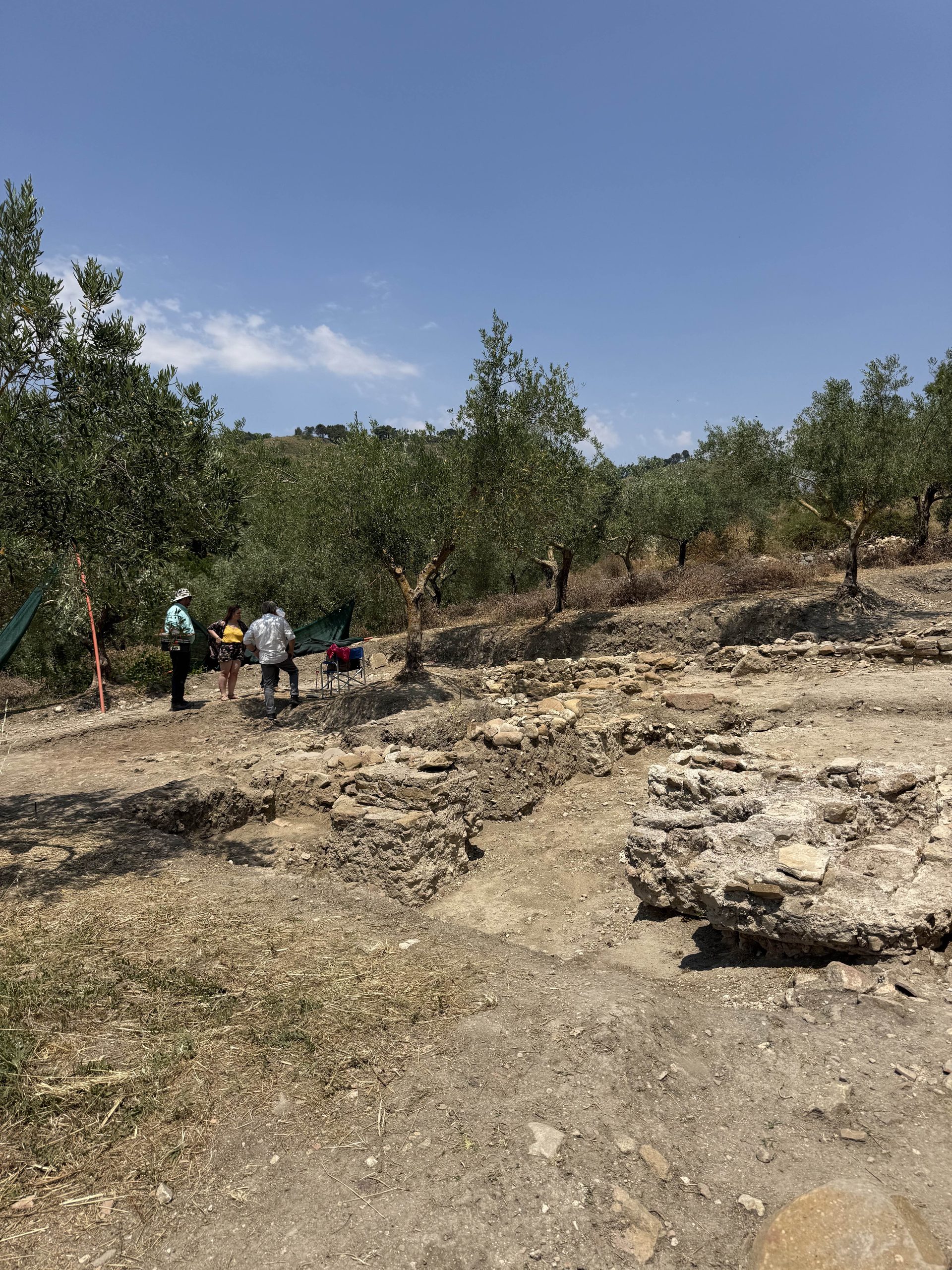
I am very grateful to have received a £500 BAA travel grant this summer, which supported me as I spent two weeks in Sicily, excavating the Late Antique rural habitation of San Miceli, located in the province of Trapani.
This site represents a critical case study for my DPhil thesis, which investigates the activities and networks of women in rural contexts in Late Antiquity. By bringing together documentary, artistic, and archaeological material, I aim to provide a comprehensive treatment of rural women’s socio-economic agency, their contributions to their immediate communities and wider economies and networks, and their lived experiences.
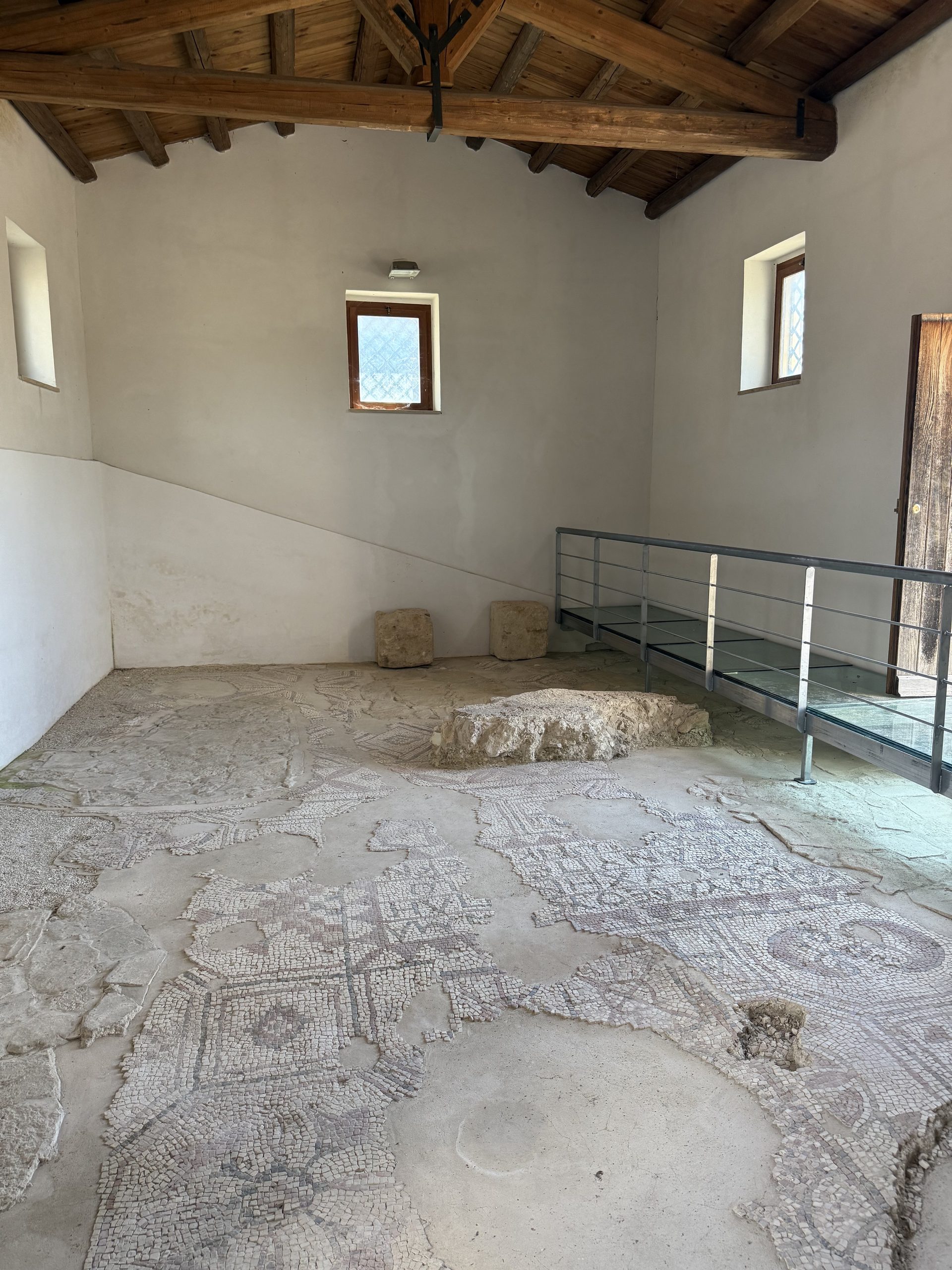
San Miceli has a rich material evidence base, including an inscription naming a female donor, the presence of numerous tombs with female skeletal remains and associated grave goods, and, uniquely, the tomb of a richly-dressed woman, found within the basilica during initial excavations led by Antonino Salinas in the 1890s.
During the excavation, I gained practical fieldwork skills, learnt how to interpret stratigraphic, ceramic, and architectural data, and was involved in thrilling discoveries, like that of a partially-intact amphora containing a large quantity of carbonised seeds. I also was able to access the basilica floor to take numerous, high-quality photos of the inscriptions, and took extensive photos of the tombs outside the basilica, which allowed me to better comprehend the funerary organisation of the community. I also visited the Salemi Archaeological Museum, to photograph grave goods and other material finds from the excavations.
Importantly, my time at San Miceli revealed the extent of the social and economic orientation of this rural community around an influential woman, allowing me to test the hypothesis I had thus far developed primarily for written material. It is likely she was the owner of the nearby villa at some point in its history, marking her as a significant economic agent. Furthermore, generations of this rural community were then served by the basilica she had a role in founding, indicating the power women could amass through social capital.
I am so appreciative of the BAA’s support for these endeavours. The award will ultimately benefit the development of a richly detailed case study of Late Antique rural womanhood, finally allowing some of these previously vanished women to come to light.
– Madeleine Duperouzel, DPhil candidate in History, Hertford College, University of Oxford